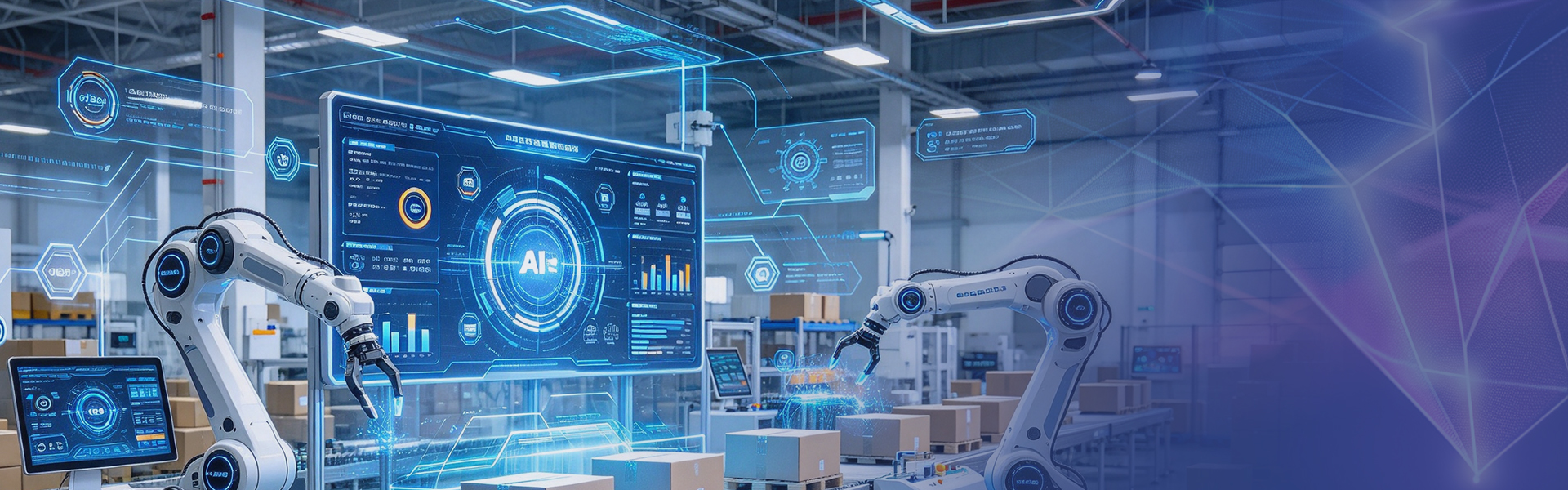
Digital Labor - Enabling Machine Workers to Work Flexibly Like Industrial Workers
AI digital workers - AI flexible productivity that works flexibly like industrial workers.
Not a cold robotic arm, but a digital industrial worker who can work on the job, watch it once, and adjust it as needed, driven by AI, seamlessly collaborating with human production lines.
What do we solve
The manufacturing industry is facing three obstacles simultaneously:
-Difficulty in recruiting workers: Young laborers are unwilling to enter the factory, skilled workers continue to leave, and the production line is experiencing a normalized shortage of personnel;
-Slow production change: Multiple varieties and small batches have become the norm, and traditional automation "changes models by day" cannot keep up with the pace of orders;
-Yield depends on people: fine processes such as dispensing, testing, and assembly, with quality highly dependent on the hands of experienced craftsmen, difficult to replicate and inherit.
Traditional industrial robots, which are characterized by high speed, heavy load, fence isolation, and fixed rhythm in large quantities, are unable to cover these flexible, light load, and variable processes. AI digital workers are here to fill this gap.
Technical Core - Empowering Machine Workers with Operations, Perception, and Learning Abilities
AI digital workers are the market implementation form under the "digital labor" system of Xinyi Research and Innovation - integrating process capabilities, environmental perception, and execution actions into a trainable "machine worker", outputting production capacity rather than "one device".
Its core is a three-layer architecture of "hand eye brain":
-Hand flexible execution: 6-axis force control+visual servo, free from dependence on specialized fixtures, like a human, "can be picked up, placed steadily, and used skillfully".
-Eye adaptive perception: Multi modal 3D vision, automatically recognizing the position, posture, and defects of workpieces, capable of handling loose materials and chaotic incoming materials.
-Brain · Rapid Production Change: AI demonstration+reinforcement learning, the platform learns process capabilities rather than fixed actions - observation → learning → execution → optimization, forming a closed loop, "just look at it once", transferring skills in minutes.
Typical application scenarios
-Automatic dispensing/testing/probe detection of electronic components (ring inductors, coils, etc.)
-Flexible handling, assembly, loading and unloading of multiple varieties and small batches
-Precision process filling with high repeatability and difficulty in recruitment
-Flexible Capacity Scheduling with Human Machine Co Line and Order Fluctuations
Why us (differentiation)
1. Different positioning: We sell "labor/production capacity", not "robots" - the customer's mindset has shifted from "fixed assets" to "callable production capacity".
2. Learn rather than move: The platform accumulates process skills, and changing products does not change lines. Skills can be reused and accumulated.
3. Integration rather than isolation: Compliant with ISO/TS 15066 collaborative safety, with human-machine co frame and no fence, directly filling the existing production line.
4. Fast up instead of long cycle: drag and drop teaching+graphical programming, hourly production changes, bidding farewell to "weekly integration".